
Ceramics
Hand-Building vs Wheel-Throwing: Which Ceramics Class Is Right for You?
When people picture pottery, they often picture the wheel — clay spinning, hands cupped around a rising vessel. But that's only half the story. Most ceramics begins with hand-building, a technique that's older than the wheel and, for many beginners, far more rewarding to start with. Here's how the two compare so you can pick the right class.
What is hand-building?
Hand-building means shaping clay without a wheel, using your hands and a few simple tools. The three classic methods are:
- Pinch — pressing your thumbs into a ball of clay to open it into a bowl.
- Coil — rolling ropes of clay and stacking them to build walls.
- Slab — rolling clay flat and cutting or folding it into shapes, like a box or a mug.
Hand-building is tactile, meditative, and very beginner-friendly. There's no equipment to fight against, so you can focus entirely on the form. It's also wonderfully expressive — no two pieces ever come out the same.
What is wheel-throwing?
Wheel-throwing uses a spinning potter's wheel to shape symmetrical, round forms like bowls, cups, and vases. It looks effortless when an expert does it, but the wheel has a real learning curve: centering the clay alone can take a few sessions to feel natural. The payoff is the satisfying, even walls and that unmistakable "thrown" look.
Which should a beginner choose?
| If you want... | Start with... |
|---|---|
| A relaxed, low-pressure first session | Hand-building |
| To make something useful on day one | Hand-building |
| The classic "clay on a wheel" experience | Wheel-throwing |
| To build skill over several sessions | Wheel-throwing |
There's no wrong answer — many potters love both and switch depending on their mood and what they're making.
How we teach it at Malina More
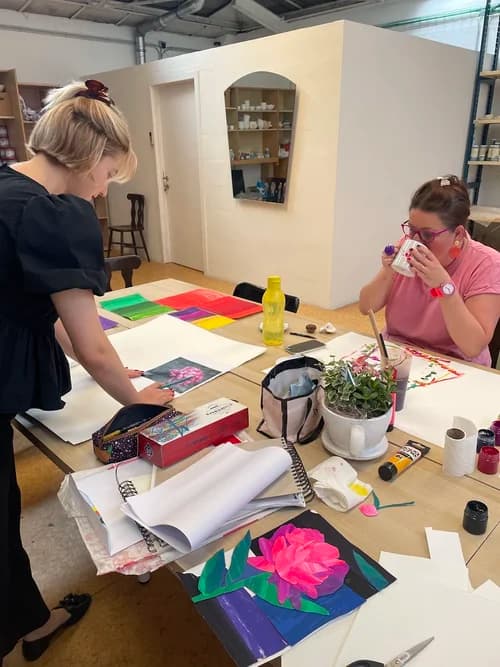
Our public workshops in Brussels focus on hand-building and ceramic painting, which makes them ideal for beginners and groups: everyone can make and decorate a finished piece in a single relaxed session, with no equipment to master first. It's the fastest route from "I've never touched clay" to "I made this."
Try it for yourself
Curious which one clicks for you? The easiest way to find out is to make something. Explore our ceramics workshops in Brussels, or start gently with a discovery session to meet the craft before you commit. You can also see what's coming up on the calendar.
Whichever path you take, the best technique is simply the one that gets you elbow-deep in clay.